ROI Loyalty Calculator
A Comprehensive Guide to B2B Loyalty Programs, Rewards, and Sales Growth
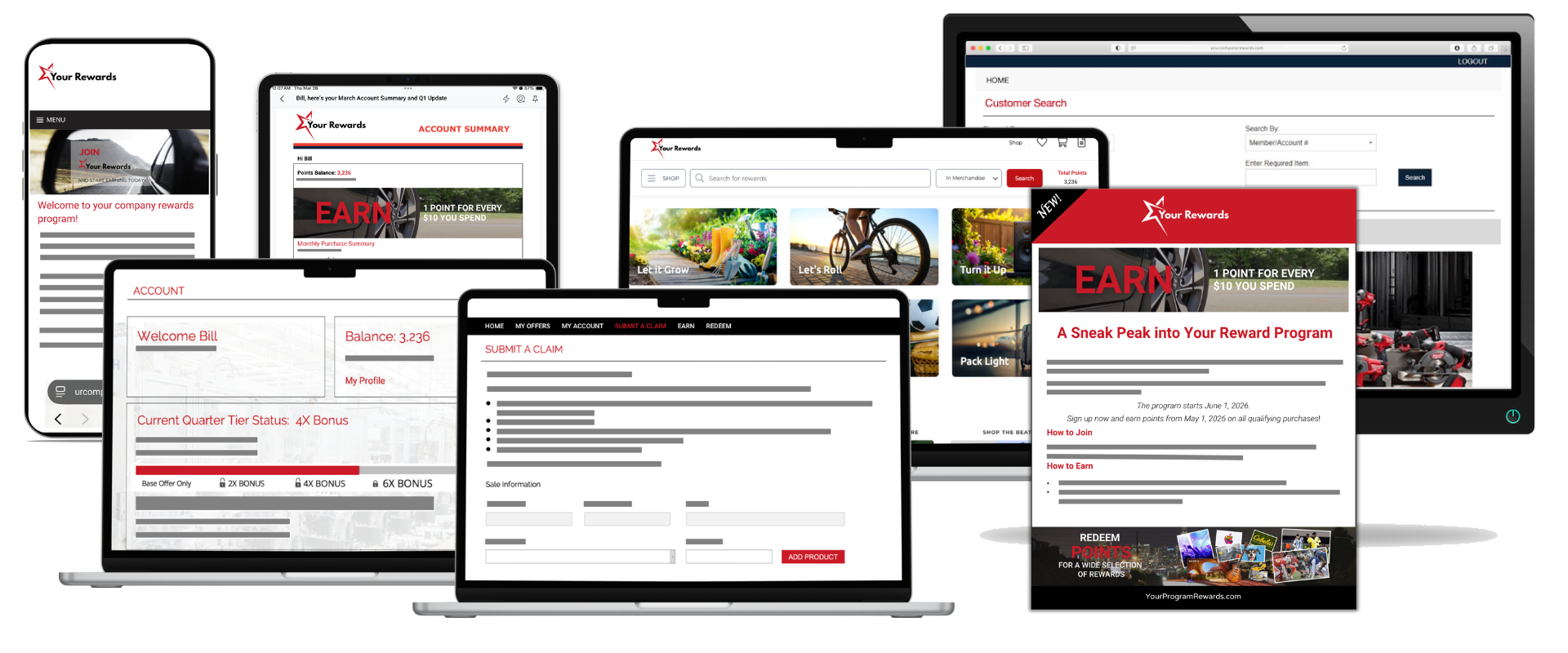
Your customers have more choices on where to buy than ever before. It's critical to demonstrate why customers should choose your business over the competition. A B2B loyalty program provides you with an opportunity to strengthen your channel relationships and boost sales.
This guide shows how Lift & Shift growth-based loyalty programs elevate sales and profits by incentivizing current customers to spend more, attracting new customers with appealing rewards, and motivating your sales team to increase sales through incentives based on customer sales growth. Lift & Shift programs have generated $50–$300+ in new sales for every $1 in rewards, with documented examples of 75X ROI and up to 179% year-over-year sales lift.
What are B2B Loyalty Programs?
B2B loyalty programs are structured marketing and sales strategies designed to encourage customers and channel partners to continue buying, purchase more often, and expand their relationship with a manufacturer, distributor, or service provider over time.
Unlike consumer loyalty programs, which often reward frequent individual transactions, a B2B loyalty program is typically built around longer sales cycles, account growth, product category expansion, and measurable business outcomes. These programs use customer sales data to identify purchasing gaps, set meaningful goals, and deliver relevant rewards to program participants based on the behaviors that matter most to the business.
A well-designed loyalty program can support customer loyalty, strengthen channel loyalty, improve engagement, and help sales teams focus attention on accounts with growth potential.
This section introduces the foundational concepts behind B2B loyalty, including how loyalty programs work, why they differ from B2C models, and how incentive programs can support long-term sales performance.
- An Overview of Incentive Programs and B2B Strategies
A detailed overview highlighting how B2B loyalty programs work, their applications, and their value in driving business growth. - How Rewards & Incentives are used in B2B Marketing
Explores the strategic role of rewards and incentives in B2B marketing, demonstrating their ability to engage customers and boost sales. - B2B Loyalty Programs: Answers to the 6 Most Common Questions
Answers the top 6 questions about B2B loyalty programs, including setup, costs, ROI, and how they drive customer loyalty and sales growth. - Do B2B Loyalty Programs Work?
An analysis of the effectiveness of B2B loyalty programs, supported by data and case studies showing their impact on sales and engagement. - Understanding the Differences Between B2B and B2C Loyalty Programs
Outlines the key differences between B2B and B2C loyalty programs, emphasizing the tailored approach required for the B2B market.
The importance of B2B loyalty programs
B2B loyalty programs play an important role in strengthening customer retention and increasing long-term account value. In competitive markets where customers and channel partners have multiple purchasing options, a well-designed loyalty program gives your business a strategic advantage by rewarding growth and purchasing consistency rather than relying on margin-eroding discounts.
Unlike traditional rebates or broad price reductions, a data-driven loyalty program targets specific sales objectives and customer behaviors. Historical sales data helps identify purchasing gaps, category expansion opportunities, declining order patterns, and underdeveloped accounts. This allows businesses to build targeted incentive strategies that encourage incremental sales, larger order sizes, increased purchase frequency, and stronger share of wallet.
B2B loyalty programs also strengthen channel partner engagement through personalized offers, growth-based rewards, and targeted communications that keep your business top of mind.
Over time, these strategies improve customer lifetime value by increasing retention, encouraging long-term purchasing behavior, and reducing the risk of customers migrating to competitors. Because rewards are tied directly to measurable sales activity, loyalty programs often deliver stronger ROI and more sustainable sales growth than rebates and discounting strategies.
The following articles explore how B2B loyalty programs support customer retention, strengthen sales performance, improve channel partner engagement, and help businesses compete more effectively in evolving markets.
- 5 Reasons Why B2B Businesses Need a Loyalty Program
Provides a compelling case for why B2B companies should invest in a loyalty program to drive sales growth, customer retention, and long-term success. - How a B2B Loyalty Program Strengthens Your Sales Team
Demonstrates how a B2B loyalty program can complement and enhance the efforts of your sales team, driving greater results. - Competing Against E-commerce Giants: The Power of B2B Customer Reward Programs
Shows how loyalty programs help B2B businesses stand out and retain customers in a landscape dominated by e-commerce players. - Use a B2B Reward Program to Automate and Scale Your Sales Process
Discusses how B2B reward programs simplify and streamline the sales process through automation and data-driven insights.

How to Build a Successful B2B Loyalty Program
Building a successful B2B loyalty program requires a deliberate marketing strategy rooted in transaction data, not a generic, one-size-fits-all framework. The strongest programs are built around clear business objectives, customer purchasing behavior, profit margins, and channel sales goals.
Highly effective B2B loyalty programs rely on three key elements:
- Data and Analytics:
Analyze your historical sales data to uncover hidden purchasing gaps, identify growth opportunities, and pinpoint strategic targeting opportunities among your customers and channel partners.
- Structured Program Design: Your program should clearly define how its participants will earn rewards, with transparent milestones that encourage repeat purchasing, increased spend, and continuous engagement.
- Audience Alignment: The program must deliver tailored incentive solutions that motivate existing customers and channel partners based on their role, value, purchasing behavior, and growth potential.
Unlike broad discounting strategies, B2B loyalty programs use targeted incentives that are tied directly to measurable business goals. Growth-based reward structures encourage participants to purchase more over time while helping businesses protect margins and improve ROI.
The following resources explain how to design, structure, manage, and optimize a B2B loyalty program that will deliver measurable sales and profit growth.
- How to Create a Wildly Successful Loyalty Program for Your B2B Business
Step-by-step guidance on designing and launching a high-performing B2B loyalty program. - Successful B2B Loyalty Programs are Powered by Customer Data Analytics
Focuses on the importance of leveraging data analytics to create effective, personalized loyalty programs. - Top 5 Recommended Incentive Solutions for a B2B Loyalty Program
Recommends incentive solutions proven to drive results in B2B loyalty programs. - How to Use Channel Incentive Programs to Drive B2B Engagement and Loyalty
Explains how channel incentives can enhance customer engagement and loyalty in B2B relationships. - What Makes B2B Reward Program Participants Stay Active Beyond the First 180 Days
Explains why B2B loyalty programs can lose momentum after 180 days—and how data-driven, fully managed incentive strategies keep participants engaged and buying. - Why Experiential Rewards Strengthen Any B2B Loyalty Program
Describes how incorporating experiential rewards can make loyalty programs more impactful and memorable. - Case Study: Enhancing Existing Loyalty Program Rewarded with 78.5% Sales Lift
A case study showcasing a successful loyalty program enhancement that drove significant sales growth.
How B2B Loyalty Programs Drive Sales Growth
A well-designed B2B loyalty program helps businesses increase sales by motivating customers and channel partners to buy more frequently, expand into new product categories, and build stronger long-term purchasing relationships.
Rather than relying on discounts and rebates, a B2B loyalty program uses targeted incentive strategies that are tied to measurable sales goals. This allows a B2B business to reward specific purchasing behaviors while protecting margins and improving program ROI.
B2B loyalty programs support sales growth in three important ways:
- Identifying purchasing gaps: Sales data and analytics can reveal where an existing customer or channel partner has the potential to buy more, purchase additional categories, or increase share of wallet.
- Encouraging larger order values: Structured B2B incentive programs use growth-based rewards, volume thresholds, and tailored offers to motivate program participants to consolidate more of their spending with your brand.
- Strengthening long-term retention: Consistent, relevant incentive solutions help reinforce customer loyalty and keep your brand top of mind across longer B2B buying cycles.
Growth-based reward structures encourage participants to increase spending over time while giving businesses greater control over reward costs. The sales data generated through the loyalty program also provides valuable insight into customer behavior, allowing businesses to refine their marketing strategy, identify new sales opportunities, and support long-term customer growth.
The following articles explore how B2B loyalty programs can help businesses drive measurable sales growth, improve customer loyalty, and increase profit performance.
- How to Use B2B Reward Programs to Deliver Sales Growth
Covers strategies for using data-driven loyalty programs to achieve consistent sales growth in B2B markets. - Your Automated Sales Partner: How a B2B Loyalty Program Unlocks Revenue from Under-Serviced Accounts
Details how B2B loyalty programs can function as an automated sales partner, driving sales growth with small and medium-sized accounts using rewards and data-driven incentives. - When the Going Gets Tough, a Customer Loyalty Program Gets Sales Going
Highlights how implementing a customer loyalty program can maintain customer engagement and drive sales during challenging times by rewarding loyal customers instead of offering deep rebates. - Improve Your Sales And Profits With A Data-Driven Spiff Program
Explores how Spiff programs powered by data analytics can boost sales performance and profitability. - 5 Ways to Drive Incremental Sales Using Your Data and B2B Loyalty Program
Five strategies for leveraging historical sales data within your B2B loyalty program to identify purchasing gaps and opportunities, enhancing customer engagement, and driving incremental sales. - Case Study: Tire Distributor Increases Target Tire Sales 179%
Illustrates the success of a tire distributor using a loyalty program to drive sales and revenue. - How B2B Rebate Programs Fit Into Your Sales And Marketing Strategy
Explores how rebate programs can strategically drive sales, market share, and customer loyalty in B2B while addressing common implementation challenges.

B2B customer loyalty programs and business growth
Business growth is our goal, and this section shows you how to reach it with a best-in-class B2B loyalty program. Learn how a customized rewards program increases customer engagement and benefits your business especially in the middle of a tough economy, and why it drives better results than the practice of offering discounts.
- How Rewards Drive Better Customer Engagement in B2B Markets
Explores how implementing a B2B customer loyalty program builds stronger customer relationships and encourages customer retention and repeat business. - 5 Reasons to Invest in a B2B Reward Program When Economic Trends Are Unpredictable
Discusses why loyalty programs are especially valuable in volatile economic conditions to retain customers and drive sales. - Growth is Softening—Is Your Customer Loyalty Strategy Holding the Line?
Explains the importance of a B2B loyalty program to preserve customer loyalty, reduce revenue decline, and keep program participants outperforming non-participants when growth slows.
Common B2B Loyalty Program Challenges
Building a successful B2B loyalty program requires more than launching rewards and hoping for participation. Many programs struggle because they lack clear objectives, meaningful incentives, ongoing management, or a data-driven marketing strategy.
Common loyalty program challenges include:
- Overreliance on discounts and rebates
- Limited use of customer sales data
- Generic reward structures
- Low participant engagement
- Poor communication strategies
- Weak reporting and ROI measurement
- Lack of long-term program optimization
The following resources explore common B2B loyalty program challenges and provide practical strategies to improve engagement, strengthen customer loyalty, and drive long-term sales growth.
- Want to Create a Successful B2B Loyalty Program? Avoid These 5 Common Pitfalls
Identifies common mistakes in loyalty program design and how to avoid them for better results. - Why Smart B2B Brands Reward Customers for Purchases They’d Make Anyway
Reward existing customers to increase loyalty, boost sales, and maximize ROI. Discover how a data-driven reward program can transform your B2B sales strategy. - 5-Step Maintenance Check for Your B2B Loyalty Program
Offers a guide to ensuring the continued success and relevance of a loyalty program through regular maintenance. - Growth Is Softening—Is Your Customer Loyalty Strategy Holding the Line?
When growth slows, B2B loyalty programs preserve customer loyalty, reduce revenue decline, and keep program participants outperforming non-participants.
B2B Loyalty Programs Deliver Sales Profit and Growth
Implementing a well-designed B2B loyalty program strategy can significantly impact your business's success. By focusing on customer retention, enhancing engagement, and driving sales growth, B2B loyalty programs offer a powerful tool for businesses looking to thrive in today's competitive marketplace.
With a Lift & Shift B2B loyalty program, you develop the unrealized sales potential from your customer accounts.
Our regular program communication acts as an automated salesperson, offering participating customers relevant and attractive opportunities to earn rewards for purchases. Turn low-spending customer accounts into higher-value program participants.
FAQ's
What is a B2B loyalty program?
A B2B loyalty program is a structured incentive program used by manufacturers, distributors, and service providers to drive sales growth, strengthen customer loyalty, and build long-term relationships with their customers, contractors, dealers, distributors, and channel partners. Unlike consumer loyalty programs, a B2B rewards program leverages transactional sales data to identify purchasing gaps and create targeted offers that motivate commercial buyers to consolidate their spend with a specific B2B brand.
How do B2B loyalty programs work?
These programs automatically track a business's transaction data to reward program participants for specific buying behaviors. When their customers or channel partners reach predetermined purchasing milestones, they earn points or incentives. A full-service provider like Lift & Shift can manage the entire process—including data analytics, transaction processing, program marketing services, and reward fulfillment—ensuring the program directly stimulates incremental B2B sales.
What industries use channel incentive programs?
Channel incentive programs are commonly used in manufacturing, distribution, HVACR, automotive aftermarket, construction, industrial supply, technology, telecommunications, and other industries that sell through dealers, distributors, contractors, or resellers.
What ROI can a B2B loyalty program generate?
A data-driven B2B incentive program can generate a significant return on investment by capturing incremental spend that would otherwise go to competitors. By analyzing sales data and targeting behavioral gaps, a B2B loyalty program can increase customer retention, purchase frequency, average order value, and share of wallet. Many programs achieve returns ranging from 300% to 700% ROI when rewards are aligned with sales objectives and profit margins.
How are B2B loyalty programs different from B2C programs?
B2B loyalty programs are designed around long-term business relationships, larger transaction values, and strategic sales objectives. Unlike B2C programs that focus on frequent, emotional consumer purchases, B2B loyalty programs use data-driven incentives to influence purchasing behavior, drive incremental sales, and strengthen channel partner engagement. A B2B rewards program usually features larger average order values, complex, multi-step buying cycles, and frequently utilize channel incentives to motivate third-party partners rather than the end-user.